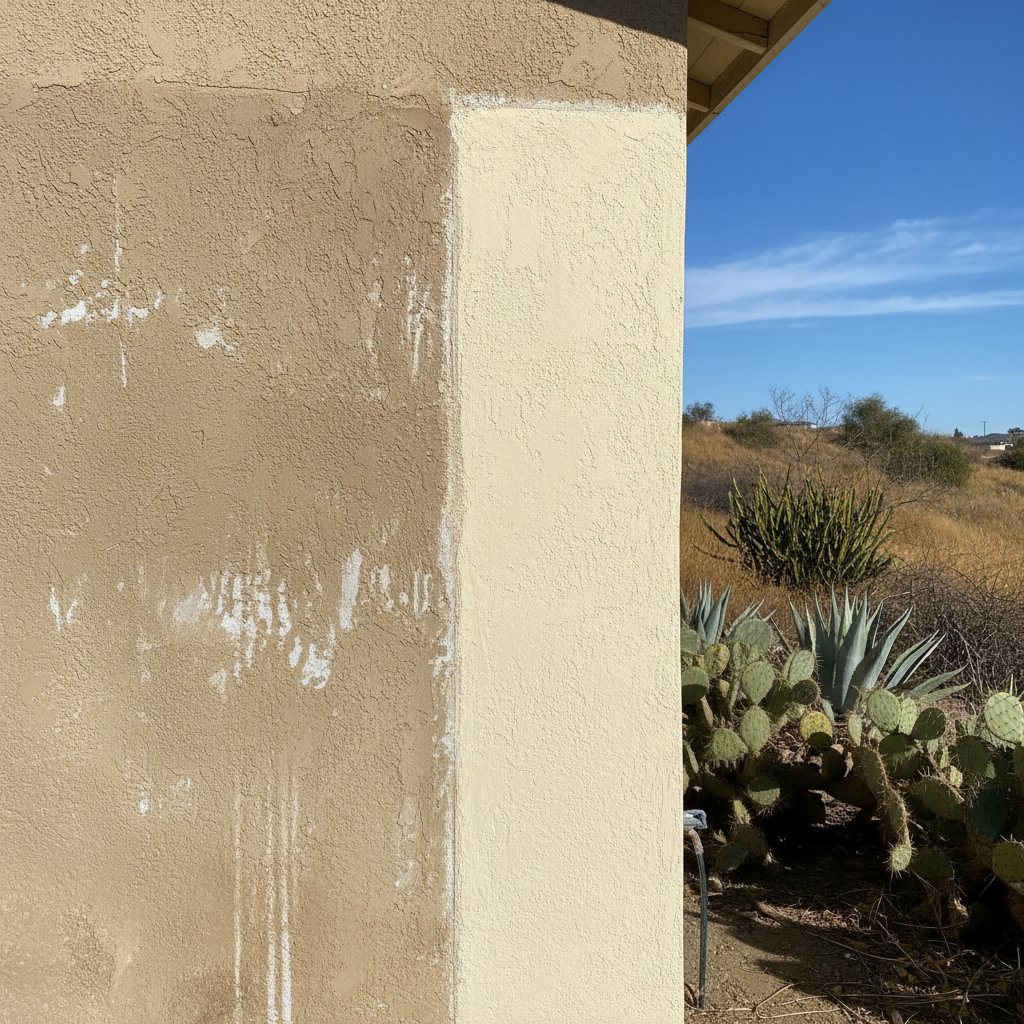
Your stucco's seen better days, huh? Maybe you've got some hairline cracks, a few bigger ones, or even some spots where it's flaking off. It happens, especially with our dry, hot summers and the occasional heavy rain we get here in San Bernardino. When you see that damage, the first thought is usually, "Can I just patch this?" or "Do I need to redo the whole thing?" It's a fair question, and the answer isn't always simple, but I'll walk you through what I've seen over the years working on homes right here in our community.
Patching Stucco: The Quick Fix
Let's talk about patching first. This is usually what folks hope for because it sounds easier and cheaper, right? And sometimes, it absolutely is the right call. A patch means we're only fixing the specific damaged area, not the entire wall or house.
When a Patch Works
- Small, isolated cracks: If you've got a few thin, non-structural cracks that aren't spreading, a patch can seal them up and prevent water intrusion.
- Minor impact damage: Did a kid's baseball hit the side of the house and chip off a piece? A patch can fix that.
- Cosmetic blemishes: Sometimes it's just a small, ugly spot that doesn't affect the integrity of the stucco.
The Downsides of Patching
Here's where it gets tricky. The biggest issue with patching, especially on older stucco, is matching. Stucco changes color over time due to sun exposure, dirt, and even the original mix. Trying to match a new patch to old, faded stucco is like trying to match a new pair of jeans to a pair you've worn for five years – it's never quite right. You'll almost always see the patch, even if it's done perfectly. It might look okay from across the street, but up close, it's usually visible. This can really mess with your home's curb appeal.
Another thing is durability. If the underlying issue causing the damage isn't addressed (like house settling or water issues), that patch might just be a temporary band-aid. Also, if you're patching a lot of different spots, you end up with a checkerboard effect, which looks worse than the original damage.
Full Re-Stucco: The Long-Term Solution
Now, a full re-stucco job is a bigger undertaking, no doubt about it. This means we're either applying a new layer of stucco over your existing, prepped stucco (a re-dash or re-coat) or, in more severe cases, removing the old stucco down to the lath and starting fresh. For most homes in areas like the North End or around Cal State, a re-dash is common if the existing stucco is still structurally sound.
When a Full Re-Stucco is Best
- Widespread cracking or damage: If your stucco has cracks all over, or large sections are failing, patching becomes impractical and ugly.
- Water intrusion issues: If you're seeing signs of water getting behind the stucco in multiple places, a full re-stucco allows us to properly inspect and repair the underlying moisture barrier.
- Outdated appearance: Maybe your stucco is just old, faded, and dingy. A full re-stucco gives your entire home a fresh, uniform look, boosting curb appeal big time.
- Energy efficiency: A new stucco system, especially one with an integrated insulation board, can improve your home's thermal performance.
- Preparing for sale: If you're looking to sell, a brand-new stucco finish can significantly increase your home's value and attractiveness to buyers.
The Downsides of Full Re-Stucco
The main drawbacks are cost and time. It's a bigger investment upfront and takes longer to complete than a simple patch. You'll have scaffolding, materials, and workers around your house for a bit. But think of it as an investment in your home's longevity and appearance.
So, Which One Should You Choose?
Here's my honest take, based on what I see with stucco in our climate: if you have just one or two small, isolated, non-structural cracks or dings, a patch is probably fine. Just be aware it might not match perfectly. If you're okay with a slight color difference, go for it.
However, if you've got widespread damage, multiple cracks, signs of water issues, or if you simply want your home to look consistently great again, a full re-stucco is almost always the better long-term solution. It gives you a uniform finish, addresses underlying issues, and protects your home for decades to come. You won't have to worry about mismatched patches or new cracks popping up next to old ones.
At San Bernardino Stucco & Plastering, we always recommend getting an expert eye on your stucco before you decide. We can tell you if that crack is just cosmetic or if it's a sign of something bigger. Sometimes what looks like a small problem on the surface is just the tip of the iceberg. Don't hesitate to give us a call; we're happy to come out and give you an honest assessment.